
Key takeaways about comprehensive eye exams:
- A comprehensive eye exam involves a series of tests performed by an optometrist or ophthalmologist that go beyond simply checking how well you can see.
- Comprehensive eye exams are essential for maintaining healthy vision. They check both your eyesight and the overall health of your eyes, can detect early signs of eye diseases and other health issues, and help protect your vision in the long term.
- If you’re overdue for your appointment, now is the perfect time to schedule one with your eye doctor.
If you’ve ever sat through an eye test and stared at a series of numbers and letters while someone asked, “Which is better, option 1 or option 2?”, you’ve likely experienced a basic eye exam.
But did you know there’s a more thorough type of exam, called a comprehensive eye exam, that plays a critical role in protecting your eye health?
Unlike a standard vision test, a comprehensive eye exam goes several steps further, evaluating not just how well you see but the overall health of your eyes. It can even help detect early signs of eye disease before symptoms appear.
What is a comprehensive eye exam?
Remember those quick school screenings where you read letters off a chart? Or the five-minute checkup at the eyeglass store? Those are more examples of routine exams. They typically measure visual acuity and screen for common vision issues, such as nearsightedness, farsightedness, and astigmatism, which help determine whether you need glasses or contacts.
A comprehensive eye exam, on the other hand, involves a series of tests performed by an optometrist or ophthalmologist that go beyond simply checking how well you can see. These exams take a deeper look at both your vision and your overall eye health.
A comprehensive eye exam involves a discussion of any medical history with your doctor and a series of tests, including:
- Eye muscle movement test: Your doctor will ask you to follow an object with your eyes. By studying the movement of your eyes for any uncontrollable motions, they can identify possible defects in the extraocular muscles, which are what control movement.
- Visual acuity test: Your doctor will cover one eye at a time while you focus on a target. As previously mentioned, farsightedness, color blindness, and astigmatism are a couple of vision conditions that can be diagnosed during this test.
- External exam and pupil reactions: Your doctor will check how your pupils respond to light and also examine the whites of your eyes and the position of your eyelids to assess overall eye health.
- Visual fields: Each eye’s full field of vision is examined to identify any gaps or unexpected blind spots.
- Topography/keratometry: Your corneal curvature is measured by shining a circle of light on the eye’s surface and analyzing its reflection.
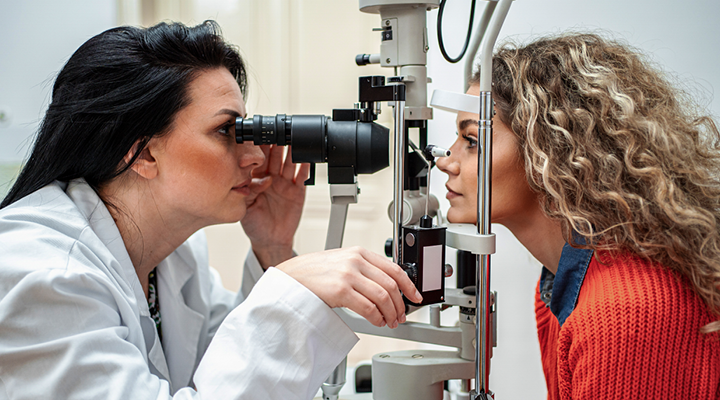
- Slit lamp exam: A special light and magnifying lens allow your provider to examine the eye in detail, including the cornea, lens, optic nerve, and retina, which helps detect signs of damage or conditions like glaucoma.
- Pressure in the eye: A quick puff of air on your eye measures internal fluid pressure, which can help detect eye conditions.
How often do I need a comprehensive eye exam?
The American Academy of Ophthalmology (AAO) recommends getting a comprehensive eye exam on the following timeline based on age, vision status, and risk factors:
- Infants: First eye exam at around six months old.
- Children: Another exam at age three, then before starting school (around age five or six).
- School-age children: Every one to two years if no vision problems are present; more often if issues are detected.
- Adults without vision problems: Once in your 20s and twice in your 30s.
- Adults with vision problems: Every year.
- Adults with no symptoms or risk factors: A baseline exam at age 40, then every two to four years until age 54.
- Adults ages 55 to 65: Once every one to three years.
- Adults ages 65 and older: Once every one to two years.
- Adults with type 1 diabetes: Five years after diagnosis, then annually.
- Adults with type 2 diabetes: At diagnosis, then annually.
Comprehensive eye exams protect your vision
Comprehensive eye exams are essential for maintaining healthy vision. They check both your eyesight and the overall health of your eyes, can detect early signs of eye diseases and other health issues, and help protect your vision in the long term.
If you’re overdue for an appointment, now is the perfect time to schedule one with your eye doctor.
Looking for more ways to protect your eyes? Check out: “How to Protect Your Eyes at the Pool”.